
A how-to guide for digital signage in fitness centers
This guide provides practical advice for how fitness centers, gyms, spas, and wellness centers should approach digital signage.

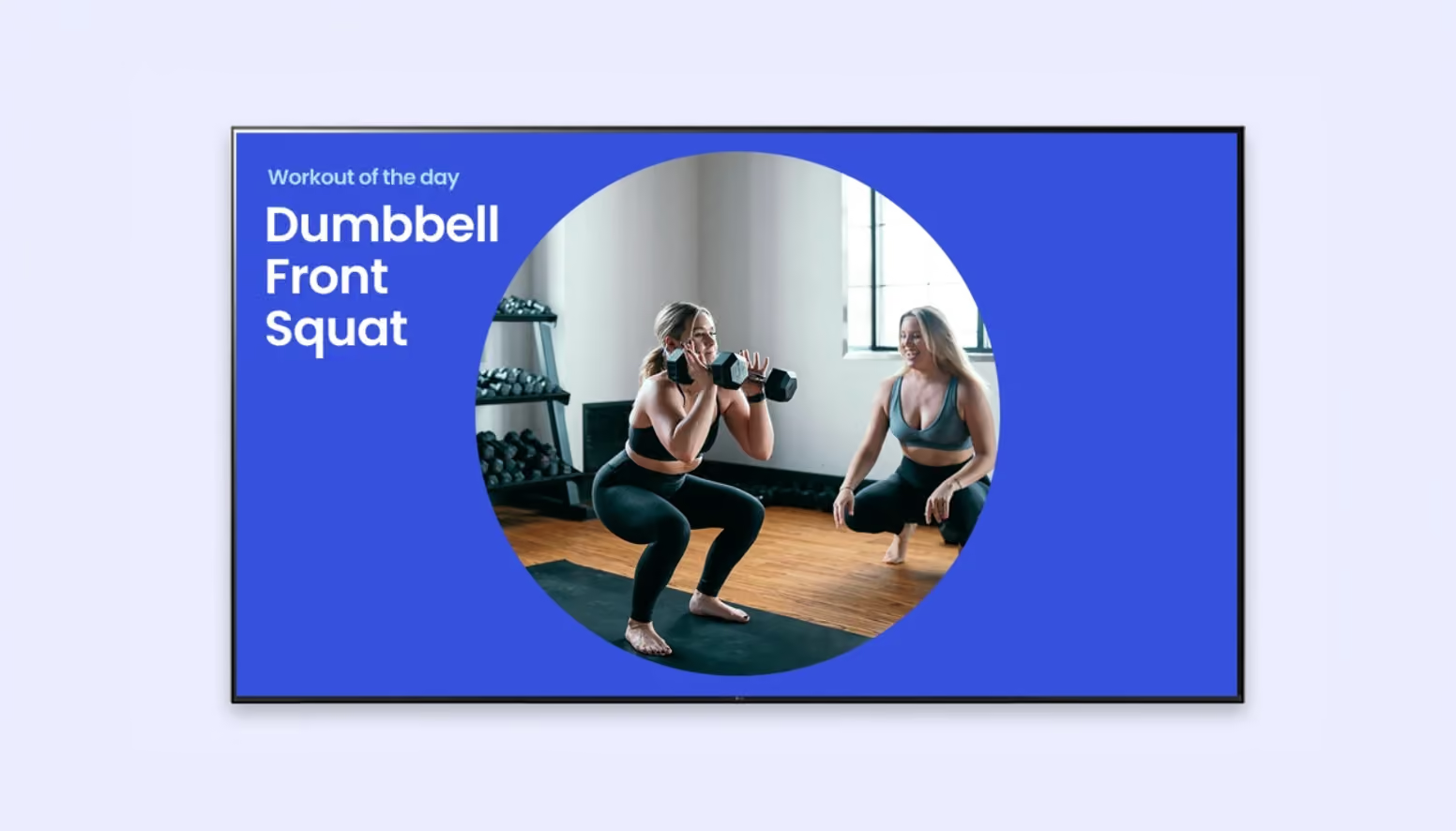
After a turbulent early 2020s, the fitness and gym industry is on a clear upward trajectory. Memberships in the United States are expected to grow from 75 million (2025) to over 90 million in 2030, according to MMCG. And much of this growth is being driven by Gen Z and millennials prioritizing fitness. This particular group are also digital natives, meaning they grew up with screens ever present in their lives. The intersection is at the core of the opportunity fitness centers have to engage their clientele in natural and impactful fashion.
This guide provides practical advice for how fitness centers, spas, and wellness centers should approach digital signage. To gain some of these insights, we spoke with Mike Hill, co-Founder of Juuno, one of the leading digital signage content management solutions for fitness centers.
How fitness centers should think about digital signage
Maximize Revenue Diversification: If you're looking to grow beyond membership fees, digital signage should be a core part of your strategy. As fitness centers increasingly supplement their core model with ancillary revenue streams — cafes, juice and smoothie bars, and micro-stores selling gear and supplements — signage gives you a powerful way to drive awareness and spark impulse purchases before, during, and after workouts. Consider using screens as menu boards or promotional displays to highlight these higher-margin offerings. Hill explains if done well, “this approach can turn a $100/month member into a $200/month member through pre-packaged meals, post-workout snacks, and apparel.” You should also explore using your screens for out-of-home (OOH) advertising, partnering with local health food restaurants, physical therapists, or supplement companies to create an additional revenue stream.
Prioritize personalized engagement: Today’s software allows close integration between a content management system (CMS) and your customer relationship system (CRM). This can allow you to integrate class schedules, trainer availability, and member milestones update automatically — no manual entry required. Hill explains, “consider using signage to personalize the member experience from the moment they walk in (e.g., "Hey Mike, your class starts in 10 minutes").” Interactive touch screens can take this further by surfacing tailored information like past workouts, upcoming bookings, and purchase history. You should also explore integrating wearable device data to support performance tracking and gamification — opt-in leaderboards, personal best call-outs, and group fitness displays can meaningfully deepen member engagement. When evaluating or upgrading your CMS, make sure to assess how well it supports these personalization capabilities, either natively or through APIs.
Improve operational efficiency: With labor costs rising, your digital signage can and should be doing more of the heavy lifting. Hill explains, “rather than having front-desk staff spend nearly half their day fielding repetitive questions about class times or facility services, let your screens act as a digital concierge.” “How-to” loops for complex equipment, QR codes for gym app downloads, and interactive facility maps are all practical ways to reduce the need for staff intervention and free your team up for higher-value interactions.
Cultivate a strong community hub: Think of your screens as more than an information tool — as Hill explains “they're an opportunity to build the kind of community that keeps members from canceling and, most if not all CMS, integrate with social media platforms.” Consider setting up social media walls that display live feeds of members tagging your gym on Instagram or TikTok, effectively turning your membership base into a grassroots marketing team. Use your signage to celebrate member milestones, like a "100th class" achievement or a weight-loss goal reached. These moments of recognition reinforce a sense of belonging and are one of the most cost-effective retention tools at your disposal.
How technology trends are making digital signage more accessible for fitness centers
Lower cost hardware options: If you haven't looked at digital signage hardware costs recently, it's time to take another look. What once required expensive, specialized media players and industrial displays has undergone a dramatic shift — think of it as the "Shopify moment" for digital signage, where professional-grade technology has become accessible to virtually any fitness center. You can now get a highly reliable Amazon Signage Stick for around $100, paired with a display that used to cost thousands. The bottom line: you no longer need to overspend to get professional and reliable professional and reliable digital signage capabilities, which means you can redirect that investment into other parts of your business.
Simplified content management: You should move away from outdated methods like USB sticks for uploading content — modern content management systems (CMS) like Juuno offer a full suite of tools to manage, schedule, and create content remotely. Remote management in particular is a capability worth prioritizing, as it allows you to scale your signage operation in ways that simply weren't possible before. On the cost side, recurring monthly per-screen fees have dropped dramatically. Look for providers offering "freemium" or scalable pricing — some offer free single-screen plans or subscriptions as low as $5–$10 per month. Hill explains, “this makes it easier than ever to test the waters without a significant upfront capital commitment.”
Improved usability and reliability: When evaluating a CMS, keep two things in mind: right-size your investment and don't pay for functionality you don't need, and make sure the platform supports tools like Canva or offers its own professionally designed template library. Hill explains, “modern platforms have moved away from complex interfaces toward intuitive drag-and-drop design, meaning you or your staff can create a high-quality promotion in minutes — no graphic designer required.”
The same principle applies to hardware. You shouldn't need an IT team to set up or maintain your digital signage. Today's media players, like the Amazon Signage Stick, come with APIs that enable your CMS to provide robust monitoring and management — making it easy to identify and address issues before they become real problems. When choosing your setup, use this simple framework as your guide: prioritize affordability, usability, and reliability, and you'll be well-positioned to get strong returns from your digital signage investment.
Getting started: digital signage advice for fitness centers
Digital signage has become an essential tool for fitness centers looking to grow revenue, deepen member engagement, and run more efficiently. By strategically placing screens throughout your facility, you can drive impulse purchases from cafes, smoothie bars, and retail offerings, while also personalizing the member experience through CRM integration, wearable devices, and interactive touch screens. Beyond revenue, signage can serve as a digital concierge — reducing the burden on front-desk staff — and as a community hub that celebrates member milestones and fuels grassroots social media marketing.
The good news is that getting started has never been more affordable or straightforward. With professional-grade media player options like the Amazon Signage Stick available for less than $100, and modern CMS applications like Juuno offering scalable pricing that lets you start small and grow. You don't need IT expertise or a large budget to run a polished, effective digital signage operation — just a clear strategy and the right solution for your needs.
Learn more about best practices in approaching digital signage with our digital signage 101 resources.
Resources
Digital signage made even simpler—introducing the Amazon Signage Display
Meet the Amazon Signage Display, a 55" 4K display with a built-in SoC media player, Ethernet, and Miracast. Same portal, app, and CMS support as the Amazon Signage Stick.
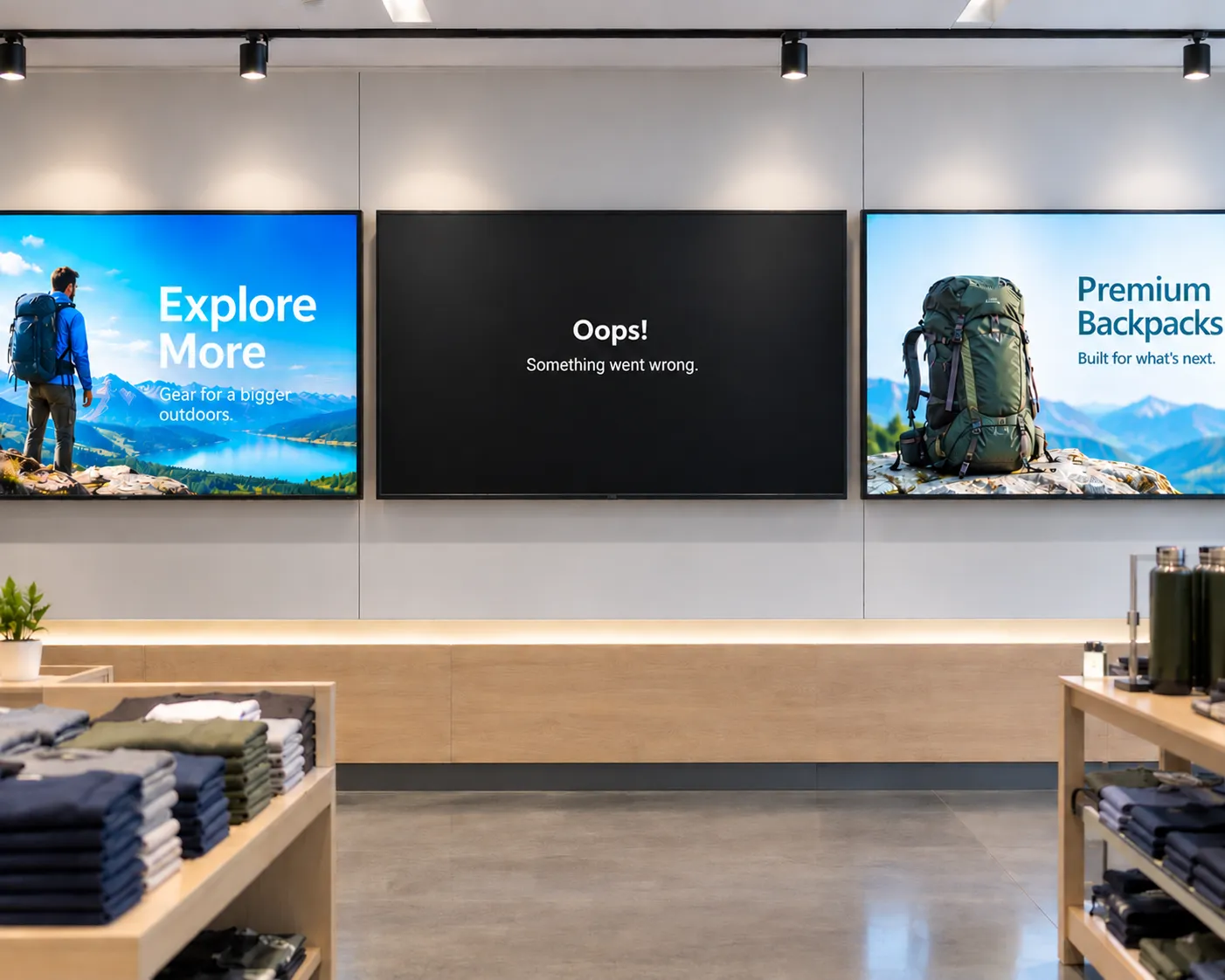
The hidden cost of "cheap" digital signage
From single-location businesses to enterprise fleets, cheap media players often cost more to operate than they save upfront. Here's what to factor in before you buy.

How smart hardware choices keep digital signage projects moving forward
Discover how IT teams are avoiding costly signage delays by pairing the right CMS with purpose-built media players—without ripping and replacing existing displays