
A how-to guide for digital signage in SMB retail stores
This guide provides practical advice for how small and medium-sized (SMB) retailers should approach digital signage.

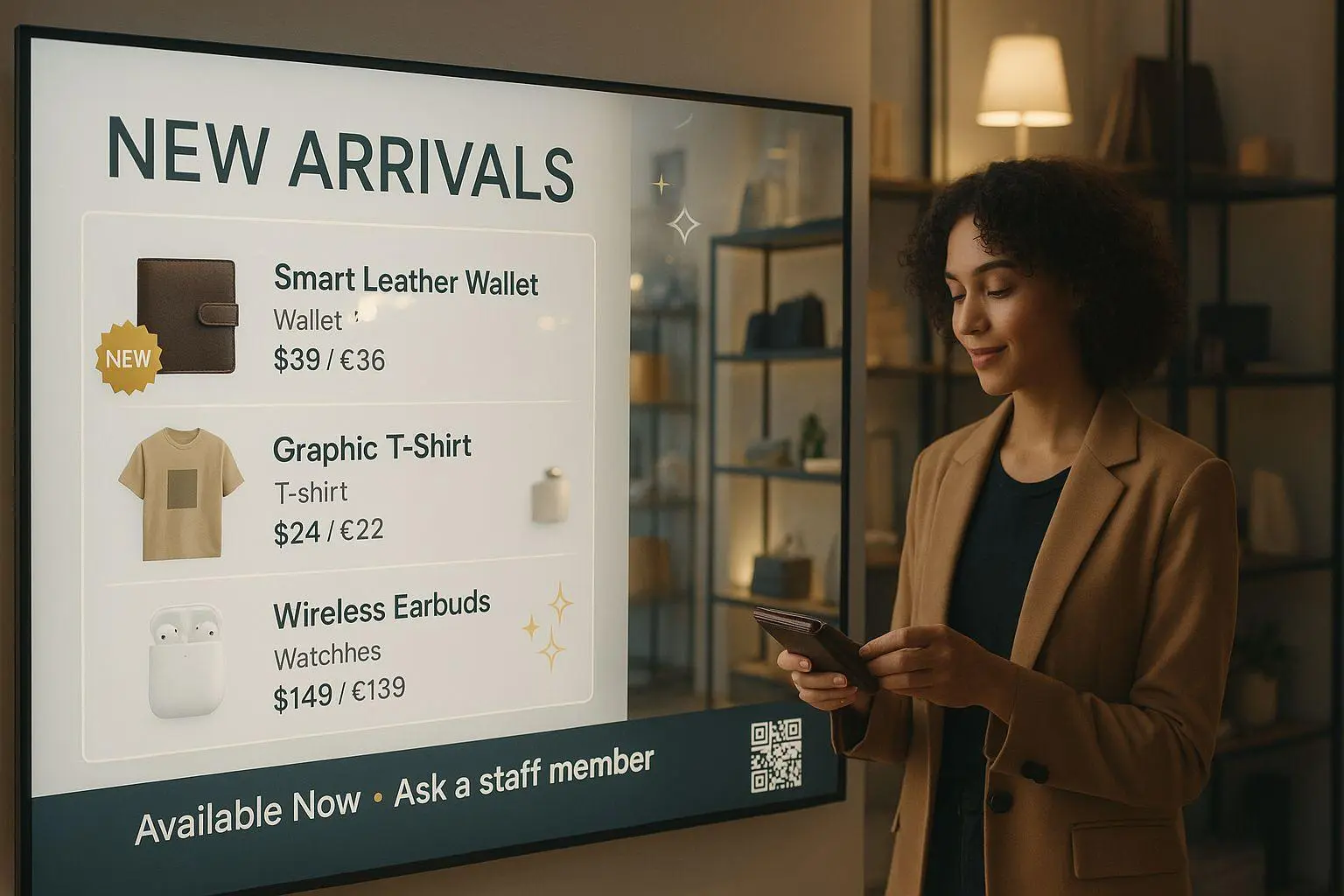
Digital signage offers small and mid-sized retailers a practical way to compete — a tool that promotes products, updates pricing in real time, and operates without adding headcount. Until recently, the cost and complexity of digital signage put it out of reach for most smaller stores. That is changing. Professional-grade hardware like the Amazon Signage Stick is now available at accessible price points, and cloud-based content management systems (CMS) offer low-cost plans that require no IT expertise to manage. Small and medium-sized businesses represent nearly 99% of all retail storefronts, according to SCORE, yet many still rely on static signs and manual updates while competing against big-box chains and e-commerce giants. The opportunity to close that gap has never been more attainable. In this guide, we share practical strategies from Muhammad Monsur Ali, co-founder of Posterbooking, one of the leading digital signage content management applications for retail.
How retailers should think about digital signage
Accelerate sales opportunities: Your digital signage is not just about advertising or in-store entertainment–it is a way to drive more sales and gain a higher wallet-share. Ali explains,”make your signage actionable by asking, what should the customer do next?” To drive more purchases you could highlight limited-time offers (“Today only”), promote bundles (Buy 2, get 1 free) or show clear pricing and value comparisons. He added, “think of your digital signage as a silent salesperson, not a static display.” And by strategically locating your signage near check-out lanes, you can create upsell opportunities and impulse purchases to increase wallet-share at the point of sale.
Prioritize personalized shopping experiences: In an era dominated by online convenience and customization, your physical store must offer an experience that justifies the visit. SMBs should use digital signage to cultivate a "boutique" feel that adapts in real-time. Ali explained, you should use these tools to better tell your product’s story. “The most innovative retailers we work with are adopting digital signage to better tell the story of their products, such as displaying the local farm where their produce was sourced or the artisan who made a piece of jewelry, creating an emotional connection that static signs can't match.” He added that beyond real-time updates, “many of our retail customers are now using tools that dynamically adjust signage based on time of day, weather, foot traffic patterns, or even local events for enhanced promotional agility.”
Drive operational efficiencies: With labor costs rising and staffing becoming more difficult, you should treat digital signage as a "virtual employee" to improve customer experiences and handle repetitive tasks. As an example, Ali mentioned, “use kiosks and QR-enabled signage to allow customers to check inventory or product specs independently.” Integrate your screens with Point-of-Sale (POS) systems. As Ali notes, this allows you to "instantly update prices or promote heavily stocked items to move inventory" without manual labor. And the scheduling features allow you to have relevant signage content automatically updated for any time of year, like “back-to-school, holidays, or the summer season.”
“Having signage throughout the store allows customers to obtain product information right at the point of discovery, instead of having to search for staff.” He concluded, “digital signage also really helps on the productivity front–employee communications, training, announcements and more.”
Master social engagement: The modern shopper is never without a smartphone; your signage should act as the "anchor" for a strategy that bridges the physical and digital worlds. You should display Instagram or TikTok feeds and let your customers interact with your digital signage highlighting customer-generated content, reviews and more.. You can also leverage QR codes and NFC to "push" content—like digital coupons or loyalty sign-ups—directly to customers' phones. Follow the lead of Ali’s innovative customers, “by using YouTube playlists or other digital streaming services to add music or convey an ambience within the store. This can help tie the in-store experience with your digital presence, building a community atmosphere that improves loyalty.”
How technology trends are making digital signage more accessible for retailers
Capitalize on lower cost hardware and software: You no longer need to invest in expensive, complex and specialized hardware to support your professional signage needs. Purpose-built media players like the Amazon Signage Stick have lowered the barrier to entry significantly. Coupled with display prices dropping rapidly, enterprise-grade signage is now within reach for local retailers. Ali points out, “there is no longer a tradeoff on reliability versus cost. Many SMB retailers first adopted digital signage using consumer-grade streaming devices as the cheaper alternative, sacrificing reliability. You can now deploy professional-grade devices like the Amazon Signage Stick at a price point for every budget.”
On the CMS front, it has never been easier for you to find the right content management solution for your store. Ali highlights, “recurring monthly per-screen fees have dropped dramatically.” Look for providers, like Posterbooking, offering "freemium" or scalable pricing. This lets you try out a CMS and see if it works for your store’s needs.”
Speed your deployment: Cloud-based CMS significantly speeds up your digital signage deployment allowing you manage and publish content remotely across all screens from a single dashboard. As Ali points out, “instead of manually updating each display on-site, you can instantly push promotions, pricing changes, and branded content to multiple locations at once, reducing labor and setup time.”
Ali added,“the speed at which you can get, for instance, the Amazon Signage Stick (overnight), and quickly sign up for a CMS, like Posterbooking, means you can be up and running fast. You don’t need to wait around for weeks for proprietary media players or install complex software - it’s basically plug-and-play once out of the box.”
Simplify your operations: Cloud CMS also simplifies your expanding new screens, making it easy to scale from one store to many without added infrastructure complexity or the need for an IT team. This flexibility can help you launch campaigns faster, stay current with real-time updates, and maintain a more consistent customer experience across locations. Ali explained, “remote management allows you to scale your signage operation in ways that simply weren't possible before—whether you are a franchisee with a couple or a dozen or more stores.”
And it is not just content, the reliability of the Signage Stick provides operational stability and remote management APIs allow CMS apps to identify signage device issues before they become a problem, keeping your signage up and running without requiring IT or onsite visits. This is particularly valuable if you have more than one location.
Getting started: digital signage advice for retailers
Digital signage has become one of the most accessible and cost-effective tools available to small and mid-sized retail stores. Thanks to falling hardware costs and flexible cloud-based software, you no longer need a big budget or an IT team to get started.
Whether you want to increase your sales, personalize your shopper experiences or just operate more efficiently, now is the time to look at digital signage. Getting up and running is faster than you might think — professional-grade media players like the Amazon Signage Stick are simple, affordable and reliable, can ship overnight, and many cloud-based CMS platforms, including Posterbooking, offer free or low-cost plans so you can test before you commit.
Learn more about best practices in approaching digital signage with our digital signage 101 resources.
Resources

How smart hardware choices keep digital signage projects moving forward
Discover how IT teams are avoiding costly signage delays by pairing the right CMS with purpose-built media players—without ripping and replacing existing displays
Whether you deploy signage or buy it: simplified digital signage made reliable and scalable
Learn how Carousel, DataVisual, and Amazon Signage deliver simplified, scalable digital signage solutions that reduce complexity and operating costs for both resellers and end customers.
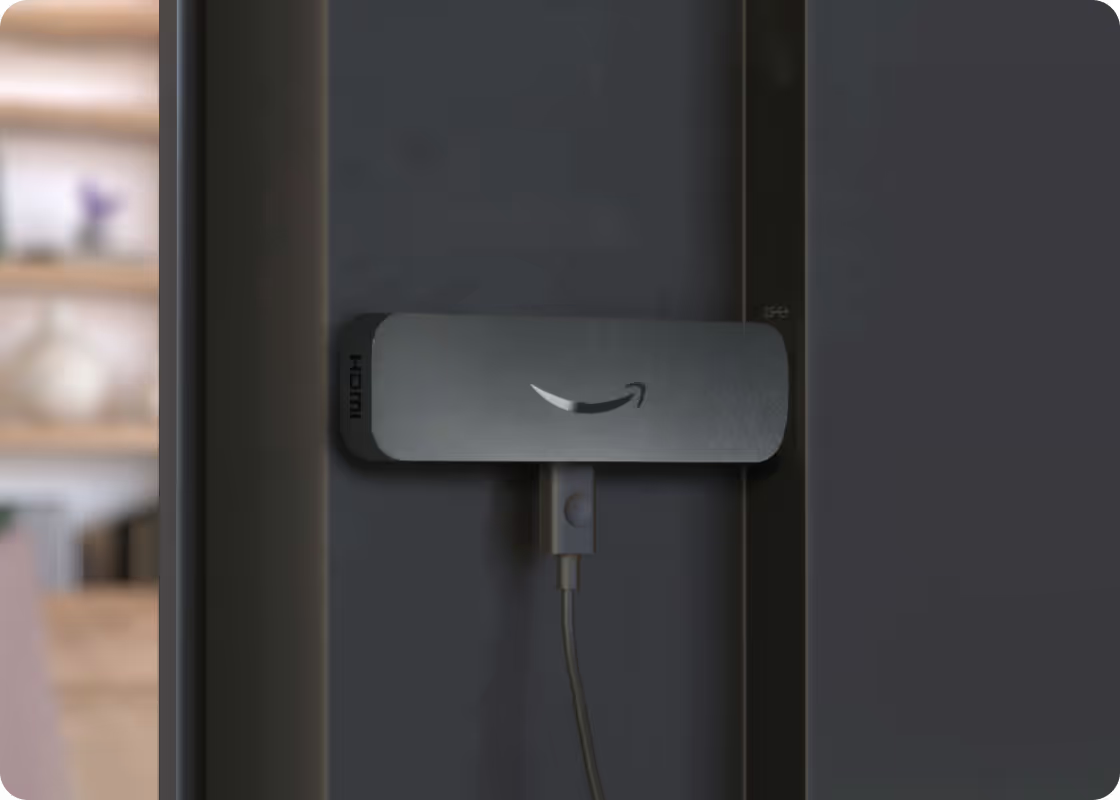
Amazon Signage Stick vs. mini-PCs: which is right for your digital signage deployment?
Evaluating hardware for your next signage deployment? Compare the operational costs, reliability, and CMS compatibility of Amazon Signage Sticks versus mini-PCs.