
How-to guide for digital signage in restaurants
This guide provides practical advice for how restaurants—fast-casual, QSRs, cafes, and more—should approach digital signage.

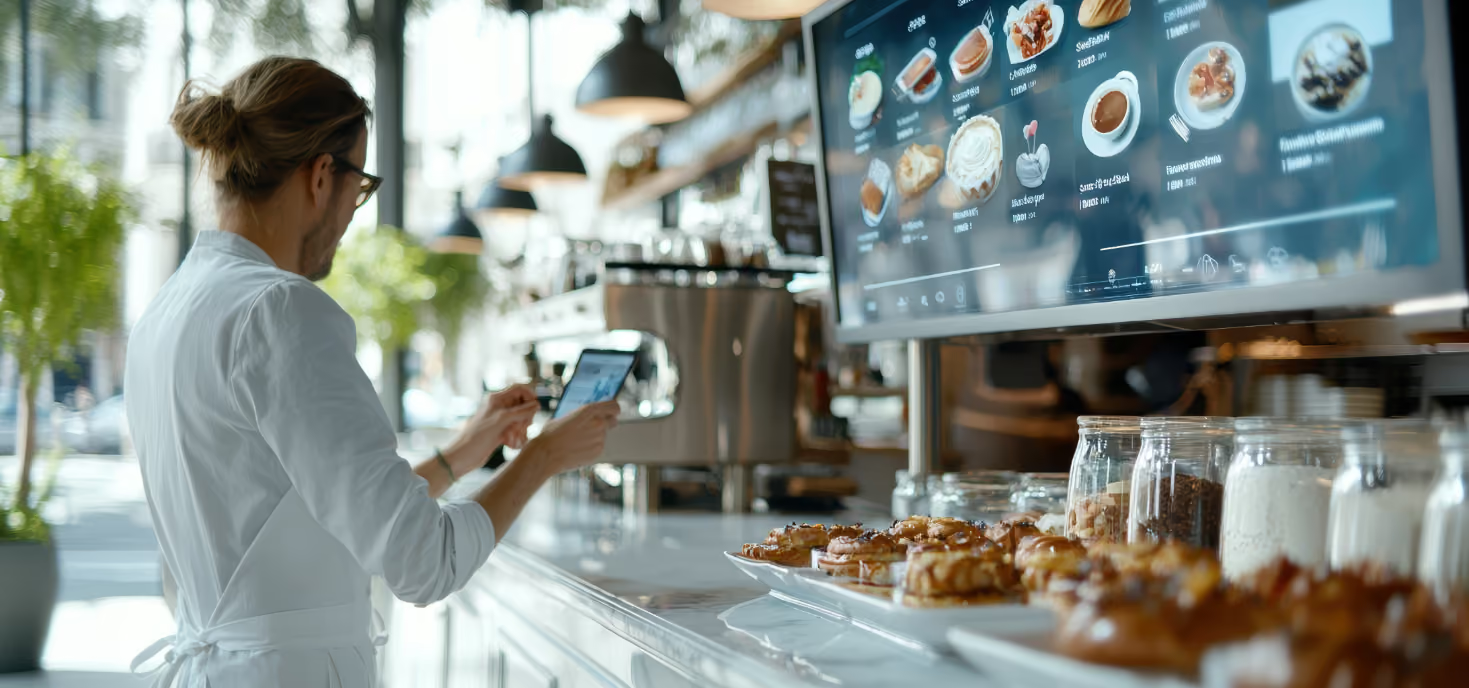
The restaurant industry is going through an evolution with a need to innovate, driven by everything from rising labor costs to new tech and customers who want things to be more customized and interactive. Whether you are a fast-casual, QSR (quick-service restaurant), coffee shop or traditional sit-down restaurant, margins are already thin and competition for wallet share fierce. Finding any way to cut costs or boost sales is a huge win. While digital signage used to be something only the biggest global chains could afford, it's now totally within reach for any restaurant owner-operator. More importantly, it's becoming increasingly important for survival.
Today, you can find digital signage solutions at just about any price point. We have professional-grade hardware like the Amazon Signage Stick that's actually affordable, and cloud-based content management systems (CMS) with low-cost plans that don't require you to be an IT expert. In this guide, we're sharing some practical strategies from Gil Matzliah, the CEO and founder of NoviSign, one of the top CMS signage software providers for the food service sector.
How restaurants should think about digital signage
Drive revenue through cross-sell/up-sell: Operating on already thin margins, digital signage and digital menu boards provide opportunities for you to capture more wallet share from your existing customers. Matzliah explains, “you can use your digital menu boards to drive food sales by grabbing the customers attention through a series of dynamic rotating daily specials or offering drink upgrades to increase margins.” For example, QSR Magazine reports up to 20% increase in transactions when paired with 'clear, real-time messaging.' The digital menu boards help tremendously with new products and promotions too. “With digital menu boards you can easily update with new promotional pricing for a new special item and customize your menu based on location, season and even time of day (ex. special late night menu), all pre-scheduled,” he added.
“Advertising networks is another area restaurants are focused on to generate additional revenue. We (NoviSign) work with partners such as 1Fish2Fish to allow our customers to generate revenue through advertising.” Beverage companies will often pay to have their products featured on in-store screens, especially during promotional periods. And nearby businesses—gyms, car washes, insurance agents, entertainment attractions—will look for high traffic spots like restaurants to reach a captive local audience. “Talking with your suppliers, local businesses or an outside agency about opportunities is a good way to get started,” Matzliah concluded.
Reduce labor costs and turnover: As an operator, you know that restaurants have some of the highest turnover rates in all of business, sometimes approaching 100%, according to the US Bureau of Labor Statistics. “Rising wages and turnover makes digital signage a great tool to both operate more efficiently and keep employees engaged,” explained Matzliah. You can have signage in the back-of-house (break rooms or prep areas), screens can display 'micro-learning' videos or visual SOPs (Standard Operating Procedures). “This speeds up training for new hires—crucial when turnover is high—and ensures they don't have to constantly ask a manager 'how do I assemble items or use this appliance?' And using signage to recognize ‘Employee of the Month’ or ‘leader boards’ (ex.fastest drive-thru times or tables turned) can improve employee morale,” he added.
Traditionally, restaurants were paper or placard based, think menus or in-restaurant advertising. And specifically on the menu boards, “digital signage has really changed the game on updating pricing, highlighting specials or just the change-over from breakfast to lunch to dinner on menu boards, with little labor involved,” he explained. Pre-scheduling menu changes or your specials and tying in the point-of-sale (POS) for price changes really makes operations simpler.
Minimize queue and delivery bottleneck: “Restaurants, especially QSR and fast-casual formats, are now serving multiple channels including—mobile orders, delivery apps, as well as traditional walk-in and drive-thru customers. This is where digital signage can become a valuable asset,” explains Matzliah. To assist with queue management digital signage can display order status (e.g., 'Order #505: Preparing,' 'Order #499: Ready'). This keeps delivery drivers and customers from crowding counters and asking staff for updates, allowing the crew to stay focused on production.
And the drive-thru provides another opportunity, where for many restaurants, studies indicate nearly 70% of transactions come through this channel. He points out that “by strategically placing screens earlier in the drive-thru line you can highlight high-margin ‘quick-prep’ items. So by the time the customer reaches the order speaker, they’ve already made a decision, shaving seconds off the transaction, allowing more cars per hour. Dynamic signage in drive-thus can improve the customer experience too.” In fact, studies show that signage can reduce perceived wait times by 35%, while also increasing order accuracy through timely upsell offers.
How technology trends are making digital signage more accessible for restaurants
Take advantage of lower hardware and software costs: Digital signage and digital menu boards are no longer a luxury and are more affordable than ever. “The confluence of new professional-grade media players in small form factors and digital displays no longer cost-prohibitive make digital signage a perfect choice for most restaurants,” explains Matzliah. Purpose-built media players like the Amazon Signage Stick provide restaurant owners and operators with a powerful player at a competitive price point. “When you couple Amazon Signage Sticks with high-quality, yet affordable displays, the question is no longer should we adopt digital signage, but how many displays should we implement,” he added. Matzliah points out, “a primary application of digital signage for restaurants is digital menu boards. And these menu boards are mission critical, if they are down, so are sales. You no longer require a trade-off on quality, reliability, or cost.”
And you now have access to powerful, yet affordable, CMS applications to manage your signage. Matzliah explains, “cloud-based CMS, like NoviSign, have never been more simple to use, yet feature-rich, to support day-to-day operations without the need for IT or specialized expertise.” He added, “leading CMS applications like NoviSign offer monthly or annual subscription models that meet any size operator, whether you have a few locations or a franchisee with many, to scale your costs as you grow.”
Get your locations up and running quickly: Whether you open a single location, grow your restaurant footprint, or build your franchise out, cloud-based CMS makes scaling and deployment quick and easy. “You should look for media players that support bulk provisioning, meaning you can configure the player with your CMS, save Wi-Fi and configuration profiles and accelerate deployment across all your screens and locations. This means each location can be up and running in minutes, not days,” Matzliah explains.
Make content and device management easy: “Every restaurant owner knows, pricing and promotions are key aspects of their survival. No longer do you need to swap out pre-printed panels on a physical menu board, digital menu boards are managed by cloud-based CMS applications, like NoviSign, making changes to pricing, promotions, specials, or ‘breakfast, lunch, and dinner menus’ and more, simple and fast across all locations,” noted Matzliah.
He points out, “when looking for media players too, remote management is a key capability that simplifies management. You can identify issues before they become a problem without the need for IT help or location visits.” Many CMS applications use media player APIs to centralize management of both content and hardware in one portal. Matzliah added, “NoviSign Studio utilizes the Amazon Signage Remote API to help its restaurant customers manage everything inside our application, making digital signage management easier than ever.”
Getting started: digital signage advice for restaurants
Digital signage has become far more accessible and affordable than most restaurant operators realize, making it a practical consideration for businesses of any size—not just large chains. Between lower hardware costs, cloud-based content management systems, and purpose-built media players, the barrier to entry has dropped significantly. The more important question today isn't whether to adopt digital signage, but how to deploy it strategically across your operation.
Begin with the main issues you are trying to solve. For most restaurants, digital menu boards mean you can update items, pricing, and specials–instantly across locations–or show order status to reduce counter crowding, and provide back-of-house screens that support staff training and consistency. For QSR and fast-casual operators, drive-thru placements and upsell messaging can also meaningfully impact throughput and average ticket size. Once your core use cases are clear, scaling to additional locations becomes much simpler.
You now have choices. Professional-grade media players like the Amazon Signage Stick are simple, affordable and reliable and cloud-based CMS applications like NoviSign which provide rich features are simple to use and offer subscriptions to meet any size restaurant operator's needs.
Learn more about best practices in approaching digital signage with our digital signage 101 resources.
Resources
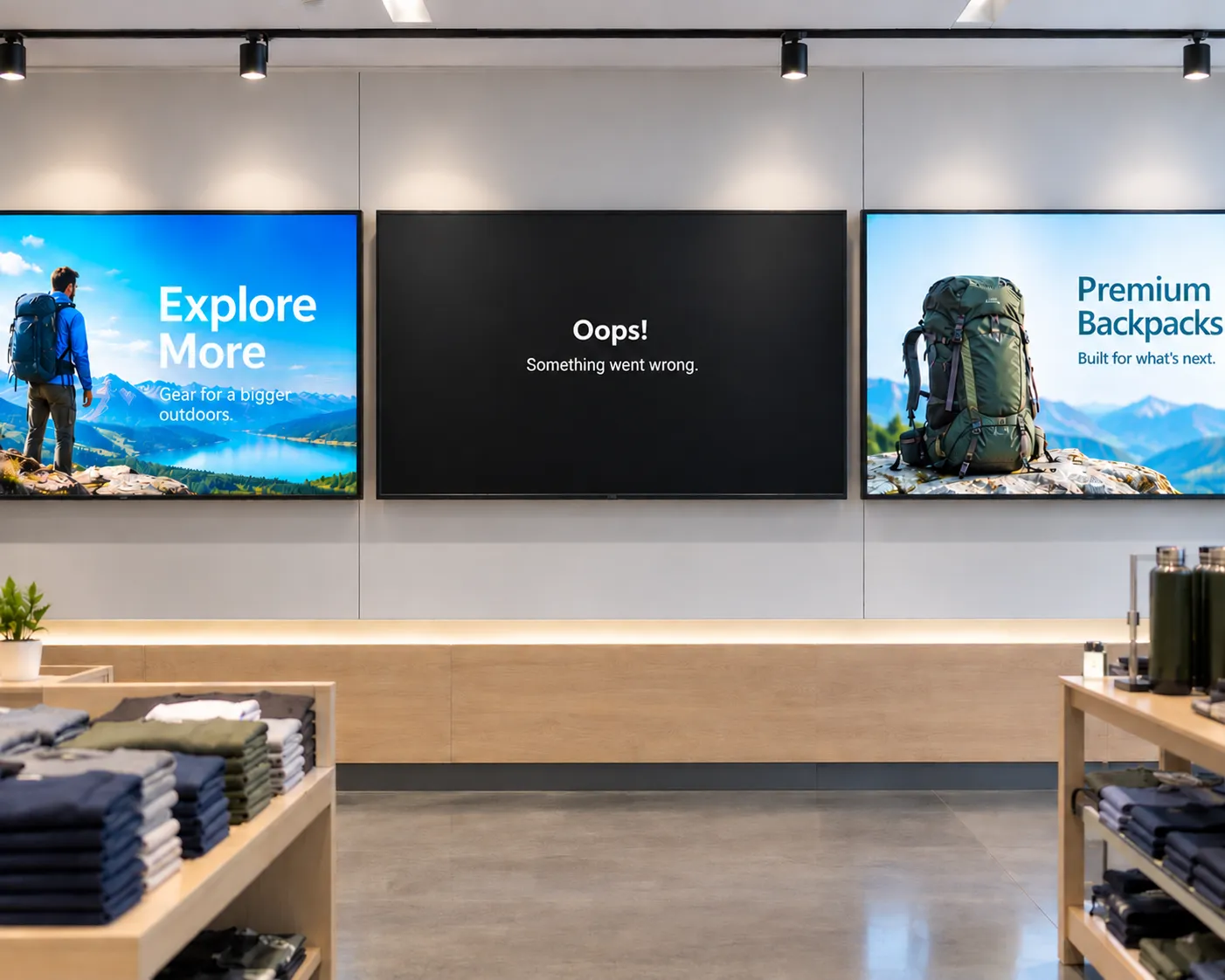
The hidden cost of "cheap" digital signage
From single-location businesses to enterprise fleets, cheap media players often cost more to operate than they save upfront. Here's what to factor in before you buy.
How smart hardware choices keep digital signage projects moving forward
Discover how IT teams are avoiding costly signage delays by pairing the right CMS with purpose-built media players—without ripping and replacing existing displays
Whether you deploy signage or buy it: simplified digital signage made reliable and scalable
Learn how Carousel, DataVisual, and Amazon Signage deliver simplified, scalable digital signage solutions that reduce complexity and operating costs for both resellers and end customers.