
Digital signage in Higher Ed — perspectives from the University of Utah & the University of Michigan
To better understand the current trends in digital signage, Amazon Signage sat down with leaders from the University of Utah and the University of Michigan. They shared their practical guidance on the role and implementation of digital signage on campuses today.

.avif)
Digital signage in Higher Ed has evolved from simple electronic bulletin boards into a centralized, mission-critical communication system. Modern digital signage has become a strategic tool that institutions use to enhance campus experiences.
To better understand the current trends in digital signage, Amazon Signage sat down with leaders from the University of Utah and the University of Michigan. They shared their practical guidance on the role and implementation of digital signage on campuses today.
How is the role of digital signage changing on Higher Ed campuses?
The University of Utah has spent nearly two decades at the vanguard of digital signage and manages over 500 displays throughout campus. “We view digital signage not as a hardware or operational line item,” explained Jake Sorensen, Director of Sponsorship & Advertising at the University of Utah, “but as a critical node of both campus experiences and part of the corporate partnership ecosystem.”
The student experience is at the heart of these efforts. Modern digital signage allows students to access real-time information such as patient wait-times at university clinics or information on campus events and activities. Furthermore, by integrating the network with emergency alert systems, the university ensures critical communication pathways are always available when needed. Sorensen added, “beyond safety and communications, digital signage should serve as a digital canvas to engage students – such as showcasing student artwork, supporting social activities, and building a sense of community.”
The University of Michigan too has vast experience utilizing digital signage with about 900 displays across its campus. “Digital signage is becoming the fabric of the campus experience–from campus communications to connecting students, faculty, and staff. Our system is key to building a vibrant campus community,” explained Rich Wong, Director of Campus Tech at the University of Michigan. “My team provides digital signage as a service to numerous departments and over 400 content managers.” He outlined how the presence of digital signage continues to grow, “more and more departments are seeing digital signage as a way to communicate to students and staff. This has expanded the types of individuals responsible for managing content and hardware. They need flexibility to support a wide variety of use cases, but at the same time need solutions to be simple.”
In what ways are technological advancements influencing digital signage within Higher Ed settings?
Both universities have seen two key major changes–in hardware and in Content Management System (CMS) capabilities. Sorensen explains, ”the recent democratization of hardware, with simple, low-cost displays and media players has enabled us to slash per-unit costs.” He noted, "we can now expand our signage network into every part of campus, managed centrally through secure, cloud-based APIs.” Prior to APIs, digital signage required complex, expensive hardware that made it costly to procure and difficult to support. "The Amazon Signage Stick is an excellent example of where we’ve used affordable hardware to power displays at enterprise scale. The remote management tools help us eliminate the ‘tech silos’ of the past, allowing our team to maintain hundreds of screens with the same effort previously required for a few,” he added.
Wong described a similar evolution in digital signage technology. “At first, we used commercial displays and PC-based media players. Both options were costly and complex, and in many situations they provided more capability than most users required,” he said. Hardware that is expensive and complicated can raise both upfront spending and ongoing support demands (for example, PC patching and maintenance). “Moving to one of the lower-cost, purpose-built device options is one way to reduce purchase cost and routine upkeep, positioning these devices between do-it-yourself options and higher-end hardware typically reserved for specialized use cases,” he noted.
On the CMS front, even the most affordable solutions now deliver sophisticated capabilities. Sorensen explains, “for us, that means things like scheduling functionality and network segmentation. This has expanded use case possibilities dramatically across the campus.”
Wong’s situation was slightly different. With many of his 400+ users unfamiliar with CMS, “choosing a feature-rich CMS created a high learning curve, making it difficult for teams to train staff and keep content current,” he explained. “CMS solutions have become more and more complex, and correspondingly more expensive. We found most use cases could be addressed with a simple solution like Google Slides. So our team focused on a tiered service model that allows us to deliver simple solutions to most users while offering a sophisticated CMS to those with more complex needs,” he added.
What are some common mistakes Higher Ed institutions make when implementing digital signage?
“At many universities, digital signage implementations are fragmented,” explains Sorensen. “Our model operates through a centralized organization – in our case aligned to the sponsorship’s organization. Centralization allows for significant economies of scale—optimizing procurement for both hardware and CMS or platforms—while ensuring unified message distribution and system integrity,” he added.
“A common pitfall is the adoption of overly complex, high-cost solutions (software and hardware) that may not align with actual campus needs,” explains Sorensen. “We advocate for prioritizing simplicity and affordability in a way that allows us to extend digital signage more broadly across the campus. This can be a challenge, as solution providers are often incentivized to recommend complex, expensive hardware. Lastly, while institutions are often excited about the initial rollout, they frequently underestimate the content requirements. Without a clear plan for who creates, approves, and expires content, the screens quickly become wallpaper—displaying outdated event flyers or generic stock photos that students learn to ignore,” he concluded.
Wong echoes those sentiments and outlined the need for Higher Ed IT teams to be more customer focused. “It’s important for IT teams offering signage solutions to shift their paradigm from focusing on internal IT needs to customer value. Too often, IT teams are focused on what works best for them, such as standardization of hardware for all users or asset management vs. what customers value–flexibility, affordability, and simplicity.” The second area he called out was the importance of offering solutions that meet the needs of different teams. “Avoid the mistake of a one-size-fits-all model. In our environment, individual departments are free to choose their own digital signage solution, so central IT services must create compelling offers that meet the different needs of each team. Many departments update their content daily, while others have the same content running for weeks.” He explains, “we created hardware and software solutions that address the requirements of each of these types of groups.”
He added a last point, “as your campus expands or renovates, partner closely with architecture and construction teams early in the process to ensure digital signage guidelines are discussed and it is not an afterthought leading to less than optimal placement.”
How do Higher Ed institutions think about leveraging their digital signage infrastructure for sponsorships and partnerships?
Digital signage is no longer merely an expense; it can generate necessary revenue for the university to support additional programs. Sorensen explains that “for us, digital signage represents one component of a comprehensive corporate partnership program including brand activations, event sponsorships, and other paid media opportunities.” And regarding best practices, he says, “our team focuses exclusively on direct sales, having built strong relationships with agencies to maintain brand control and message alignment with our university values.“ The deep relationships with agencies provide access to businesses and corporations seeking the highly sought after college campus audiences.
Wong’s approach to digital signage as an additional income source is slightly different, for now. “While corporate partnerships and sponsorships can be lucrative, and we’ve done some experimentation, currently we are focused on finding innovative ways to use digital signage for improving campus communication and student experiences.”
What we have learned
While each university approaches digital signage slightly differently, they are both innovators in the use of digital signage on campus. We want to thank both Jake and Rich for sharing their practical insights on digital signage in Higher Ed institutions. They underscore a clear consensus–modern digital signage has become a mission-critical tool requiring strategic implementation. Technology has evolved to shift away from expensive, complex, PC-based hardware toward affordable, specialized devices like the Amazon Signage Stick. Key considerations are reducing upfront costs and ongoing maintenance, enabling broader campus deployment. Ultimately, their shared guidance highlights that success in this evolving landscape is built on prioritizing simplicity and affordability to align with real campus needs, moving past the pitfall of adopting overly complicated, high-cost solutions.
Learn about the Amazon Signage Stick and find out how we are helping a multi-campus institution solve their digital signage challenges.
About the Higher Ed leaders

Jake Sorensen, the Director of Sponsorships and Advertising at the University of Utah, supports campus initiatives around digital signage and oversees the business and advertising operations of student media.

Rich Wong, the Director of Campus Technology for the central IT team, is responsible for numerous technology programs across campus including digital signage. Rich also serves on the board of directors for the University of Detroit Jesuit High School and Academy.
Resources
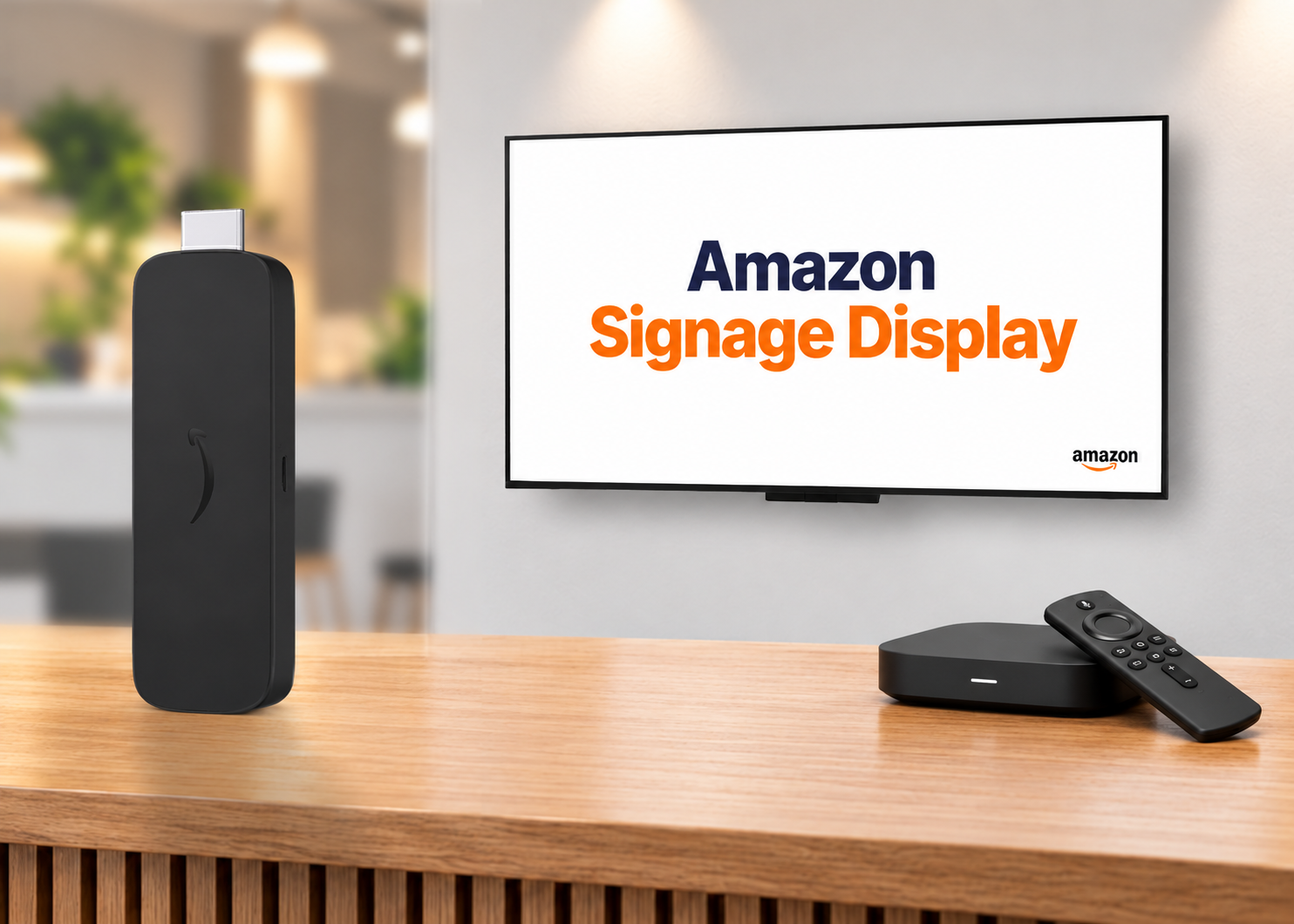
Decoding digital signage hardware–SoC display, specialized player, or purpose-built stick
The media player drives everything in a digital signage deployment. Here’s how the three main hardware categories compare and a framework for choosing the right one.
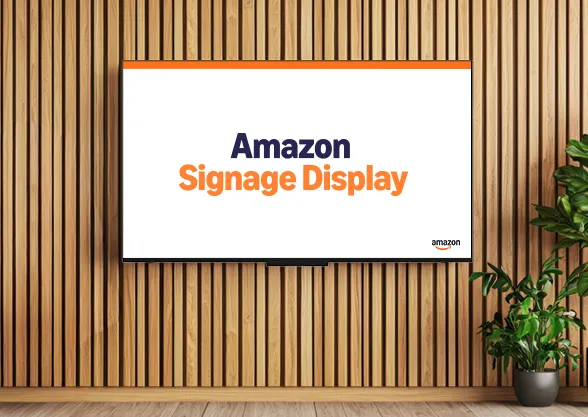
Digital signage made even simpler—introducing the Amazon Signage Display
Meet the Amazon Signage Display, a 55" 4K display with a built-in SoC media player, Ethernet, and Miracast. Same portal, app, and CMS support as the Amazon Signage Stick.
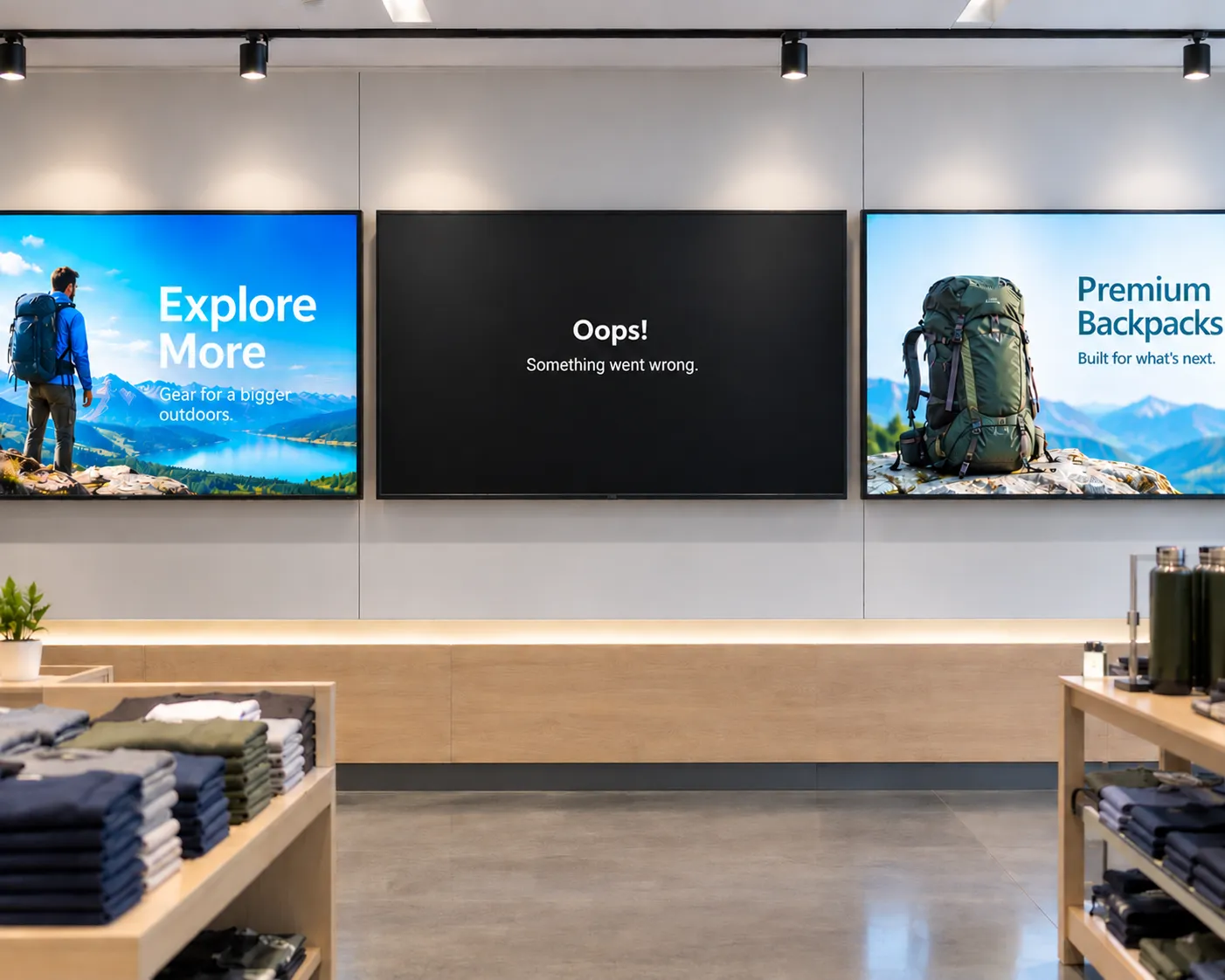
The hidden cost of "cheap" digital signage
From single-location businesses to enterprise fleets, cheap media players often cost more to operate than they save upfront. Here's what to factor in before you buy.