
Beyond Windows 10 — a guide to your digital signage media player transition
With the official End-of-Life (EOL) of Windows 10 Pro now behind us, staying on this platform isn't just a technical debt—it’s a security liability. What is emerging is a shift towards dedicated android-based devices that offer enterprise governance without the "Windows Tax."

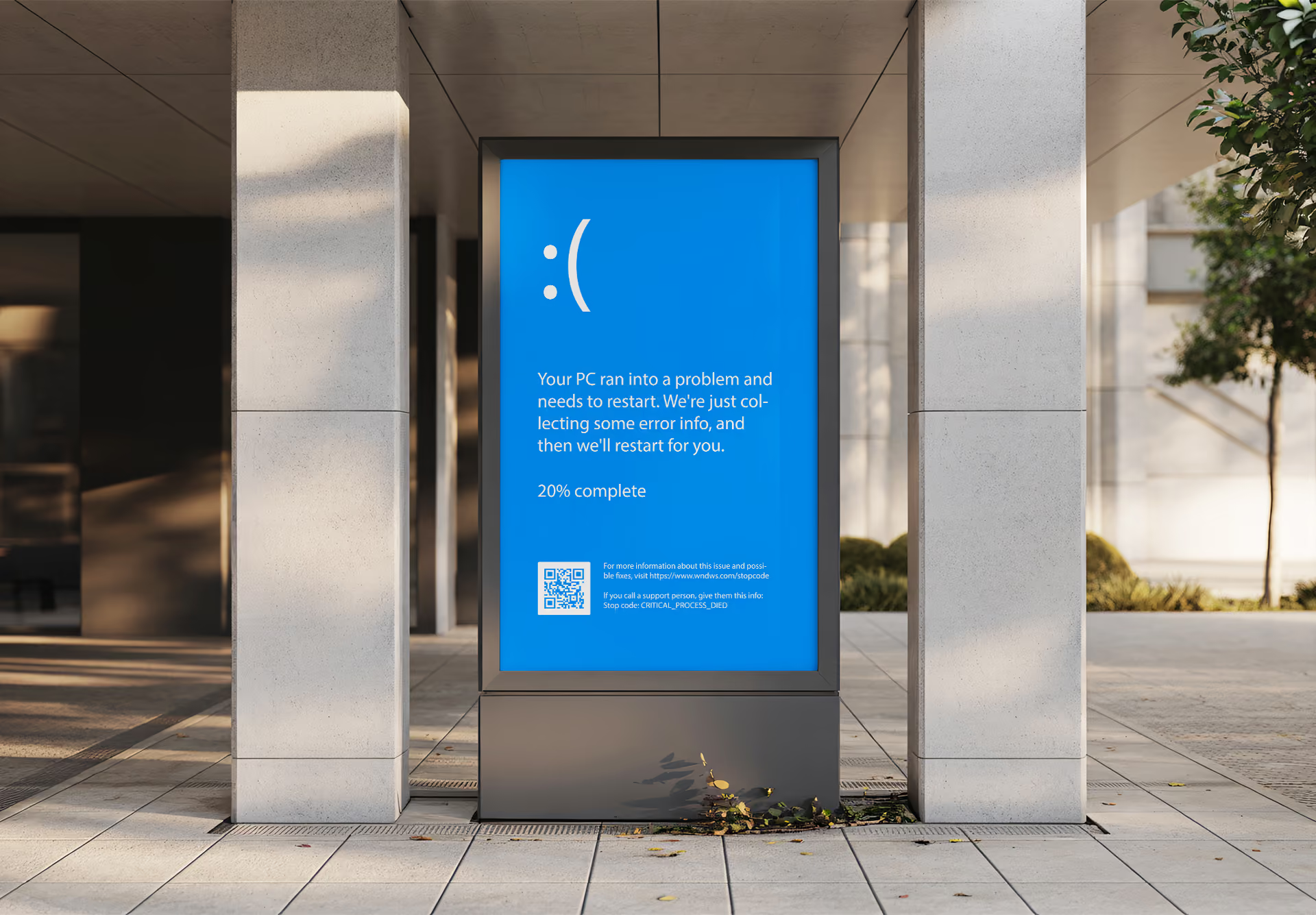
The October 2024 cutoff for Windows 10 Pro has passed, leaving many signage networks vulnerable. Organizations must now transition from legacy OS complexity to purpose-built hardware to maintain security, compliance, and operational uptime.
Digital signage teams have historically relied on Windows 10 Pro as the foundational OS for media playback. With the official End-of-Life (EOL) now behind us, staying on this OS isn't just a technical debt—it’s a security liability. What is emerging is a shift away from general-purpose PCs toward dedicated android-based devices that offer enterprise governance without the "Windows Tax."
A practical migration model: security over staleness
The biggest risk of remaining on Windows 10 isn't just a blue screen; it's version locking. Once security patches cease, your digital signage becomes a "soft target" for network intrusion. Moving to a modern, supported OS is the only way to ensure:
- Regulatory Compliance: Meeting PCI-DSS and GDPR mandates for vendor-supported software.
- Backward Compatibility: New CMS features, such as AI-driven content triggers and 4K rendering, will not run without system crashes because the CMS no longer supports the older Windows 10 operating system.
- Operational Agility: Avoiding "stagnant infrastructure" while competitors leverage real-time data synchronization.
Solution options to replace your digital signage player
The industry has evolved beyond the high licensing fees and heavy hardware requirements of legacy Windows environments. Organizations are now choosing between three primary paths:
- Consumer-Grade Streaming Devices: While affordable, these devices typically lack a dedicated "kiosk mode," fail under continuous 24/7 thermal demands, and offer no guarantees for security patches or remote management capabilities.
- Proprietary OS Players (BrightSign, Tizen): Highly reliable and engineered for signage but often involve high CAPEX and closed ecosystems.
- Purpose-Built Android-based devices: Devices like the Amazon Signage Stick that bridge the gap—offering the price point of consumer hardware with the "kiosk-mode" and remote management and security patch support of industrial players.
Why the Amazon Signage Stick is gaining ground
Standard consumer media sticks are designed for living rooms; the Amazon Signage Stick is designed for businesses. The challenge with standard hardware is management at scale. This dedicated solution provides a standardized, shared operations console that fits enterprise workflows through a dedicated Remote Management API.
In practice, this modern solution is most valuable when it supports:
1) Professional-Grade Execution
- Kiosk Mode: Boots directly into content, stripping away consumer ads and home screens.
- 24/7 Optimization: Engineered for continuous playback without the thermal throttling of consumer sticks.
- Open Environment: Compatibility with over 50 third-party CMS providers.
2) Enterprise-Friendly Governance
- Remote Verification: "Proof of Play" via remote screen capture to see exactly what is on the screen.
- Core Hardware Control: Ability to reboot, reset, and manage power cycles without a physical remote.
- Scaled Deployment: Grouping and location-based network profiles for large-scale device management.
- Hardened Infrastructure: Leveraging a purpose-built OS to reduce the attack surface compared to a general-purpose operating system.
3) Lower Operational Burden
- Health Dashboards: Real-time system metrics and connectivity tracking to catch issues before downtime occurs.
- Reduced Licensing: Elimination of the "Windows Tax" and complex update cycles.
Who benefits most from this transition?
The move to a purpose-built device is most useful where reliability is non-negotiable and the "IT ticket load" needs to be reduced:
- Retail & Point-of-Sale: Where PCI-DSS compliance and high-performance 4K promos are required.
- Hospitality & QSR: Where menu boards must remain synced and "black screens" impact immediate revenue.
- Large-Scale Organizations: Where managing hundreds of devices via a central CMS/API is a requirement.
- SMBs on a Budget: Where high-end industrial players are cost-prohibitive, but consumer sticks are too unreliable.
What to look for in a modern signage workflow
If you are evaluating your post-Windows 10 strategy, prioritize with security in mind:
- Remote Management API: Ensure you can "see" and "reboot" the device from your desk.
- Kiosk Mode by Default: No consumer distractions or "sleep timers" with an added layer of security.
- CMS Flexibility: Don't get locked into a single software provider.
- Thermal Rating: Verified for 24/7 commercial operation.
Bottom Line: Windows 10 is no longer a viable option for professional signage. The transition to the Amazon Signage Stick represents a move toward an operating model that is faster, more secure, and significantly more cost-effective.
Learn more about the Amazon Signage Stick.
Resources
How smart hardware choices keep digital signage projects moving forward
Discover how IT teams are avoiding costly signage delays by pairing the right CMS with purpose-built media players—without ripping and replacing existing displays
Whether you deploy signage or buy it: simplified digital signage made reliable and scalable
Learn how Carousel, DataVisual, and Amazon Signage deliver simplified, scalable digital signage solutions that reduce complexity and operating costs for both resellers and end customers.
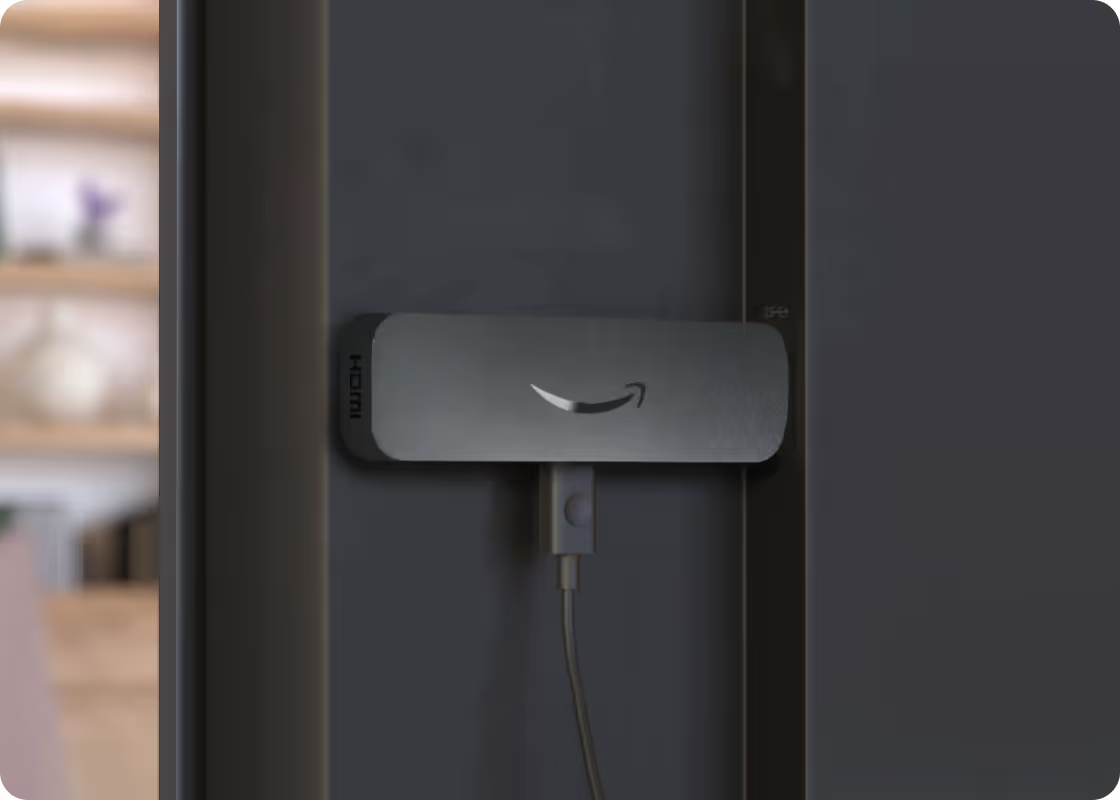
Amazon Signage Stick vs. mini-PCs: which is right for your digital signage deployment?
Evaluating hardware for your next signage deployment? Compare the operational costs, reliability, and CMS compatibility of Amazon Signage Sticks versus mini-PCs.