
Top learnings from ISE 2026
ISE 2026 showed digital signage shifting from AV to enterprise infrastructure, with focus on security, remote management, and global operations—where AI's real impact is operational efficiency.

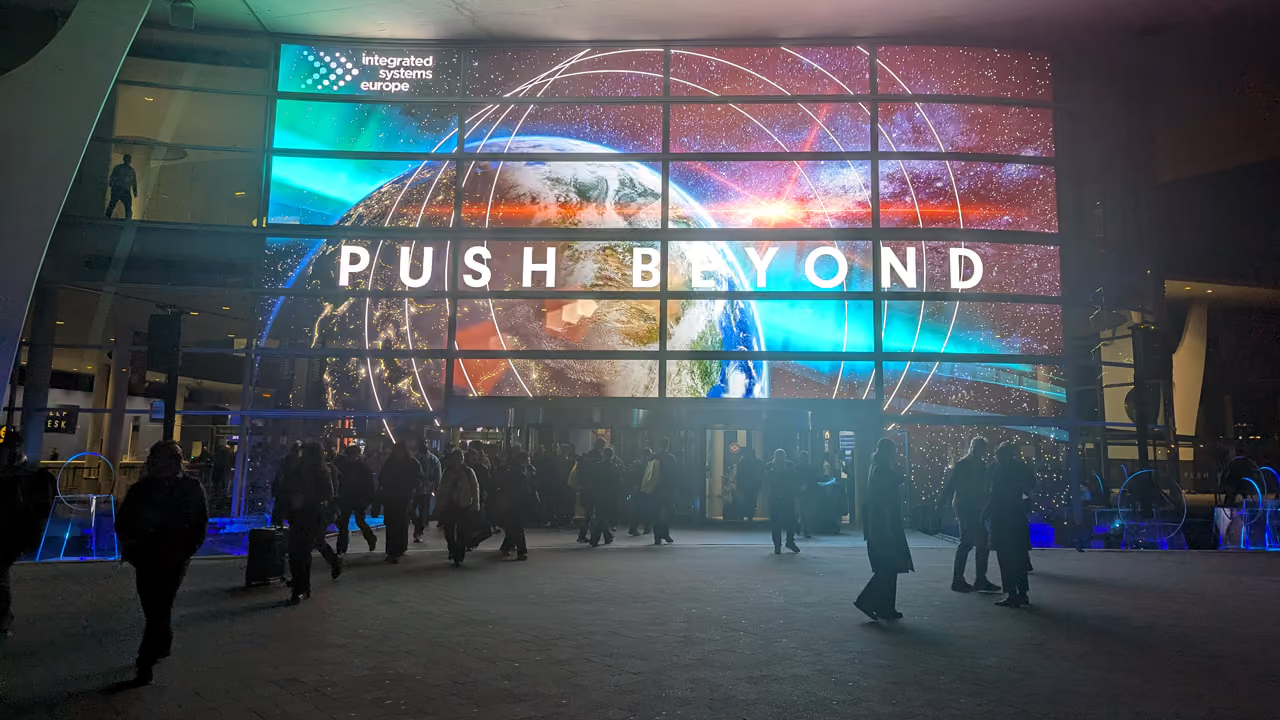
ISE (Integrated Systems Europe) 2026 made one shift hard to miss: digital signage is increasingly evaluated not as “AV equipment,” but as endpoint infrastructure - networked, governed, and expected to operate reliably across distributed environments.
The question many teams are asking is evolving:
- Content creation and playback still matter but are increasingly assumed.
- The real differentiator is whether a signage system can be operated securely and reliably at scale, across locations and stakeholders.
Here are the post-ISE signals that stood out, and why they matter for organizations planning multi-site deployments.
1) Security and governance are becoming procurement gates
Networked screens are part of the enterprise attack surface. For many organizations, especially those scaling across regions, security is moving from a “checklist item” to a gating requirement.
In practical terms, customers increasingly want to understand:
- How access is managed (roles, permissions, auditability)
- How updates and patching are handled
- How devices are identified and governed within the fleet
- What the support model looks like (and whether it creates operational workarounds)
As signage expands beyond pilots, governance expectations converge with broader enterprise IT standards.
2) At scale, remote device management becomes the product
Once deployments move from dozens of screens to hundreds or thousands, remote management stops being a feature, it becomes the operating layer of the deployment.
This is where many signage programs struggle: not because content playback is hard, but because real fleets become messy:
- Mixed network conditions
- Different hardware generations over time
- Varying ownership models (IT vs integrator vs store operations)
- Changing policies as environments evolve
At that point, “management” isn’t just a dashboard. It’s visibility + remediation + lifecycle control at scale.
3) Connectivity and reliability are back in the spotlight
Distributed environments drift by default: Wi-Fi variability, captive portals, VLAN policies, bandwidth swings, and site changes all impact uptime.
When connectivity drifts, everything downstream suffers, content plans, measurement plans, and operational SLAs.
What scales are systems designed around:
- predictable recovery when networks change
- fast remote diagnosis of connectivity issues
- minimizing on-site intervention (because it scales linearly with location count)
The KPI that matters on the floor is still simple: uptime.
4) Global readiness is the next scaling wall
A recurring theme, especially in conversations about multi-country rollouts was the push for standardization:
“Can we deploy beyond one country without turning every new region into a new project?”
Global readiness isn’t just commercial availability. It’s operational repeatability:
- Regional requirements and certifications
- Supply chain continuity and refresh cycles
- Warranty/RMA logistics that work internationally
- Spares strategy and replacement SLAs that stay cost-effective
- Channel readiness for install and support models
In practice, “global” often means one thing: repeatable operations.
5) The most durable AI opportunity is operational
ISE featured plenty of AI discussion around content generation. But the more durable long-term opportunity is AI applied to operations, helping teams run fleets with fewer escalations and faster resolution.
You can think of this as “operator-first automation,” including:
- Earlier detection of issues
- Faster isolation of likely root causes
- Guided remediation and next-best actions
- Reducing repeat incidents and downtime
The outcome operators care about is straightforward: fewer tickets, lower time-to-recovery, and less on-site intervention.
6) New display technologies are real, but they change the operating model
We also saw growing practical interest in technologies like ePaper, often framed less as “new shiny hardware” and more as a new operating model.
Different display technologies change assumptions around:
- Update cadence
- Verification and monitoring
- Maintenance and replacement planning
- Power and installation constraints
The key takeaway isn’t “ePaper vs. LCD.” It’s that new display tech can introduce new operational complexity if the management model doesn’t evolve with it.
Where Amazon Signage fits in this shift
The ISE takeaway for us is that as signage becomes more software-led and operations-driven, customers and partners increasingly value consistent, manageable, affordable media player layers that support repeatable CMS-led workflows across distributed environments.
That’s also why partnerships matter: customers want confidence that their chosen CMS and deployment model can scale reliably, without turning growth into an operational burden.
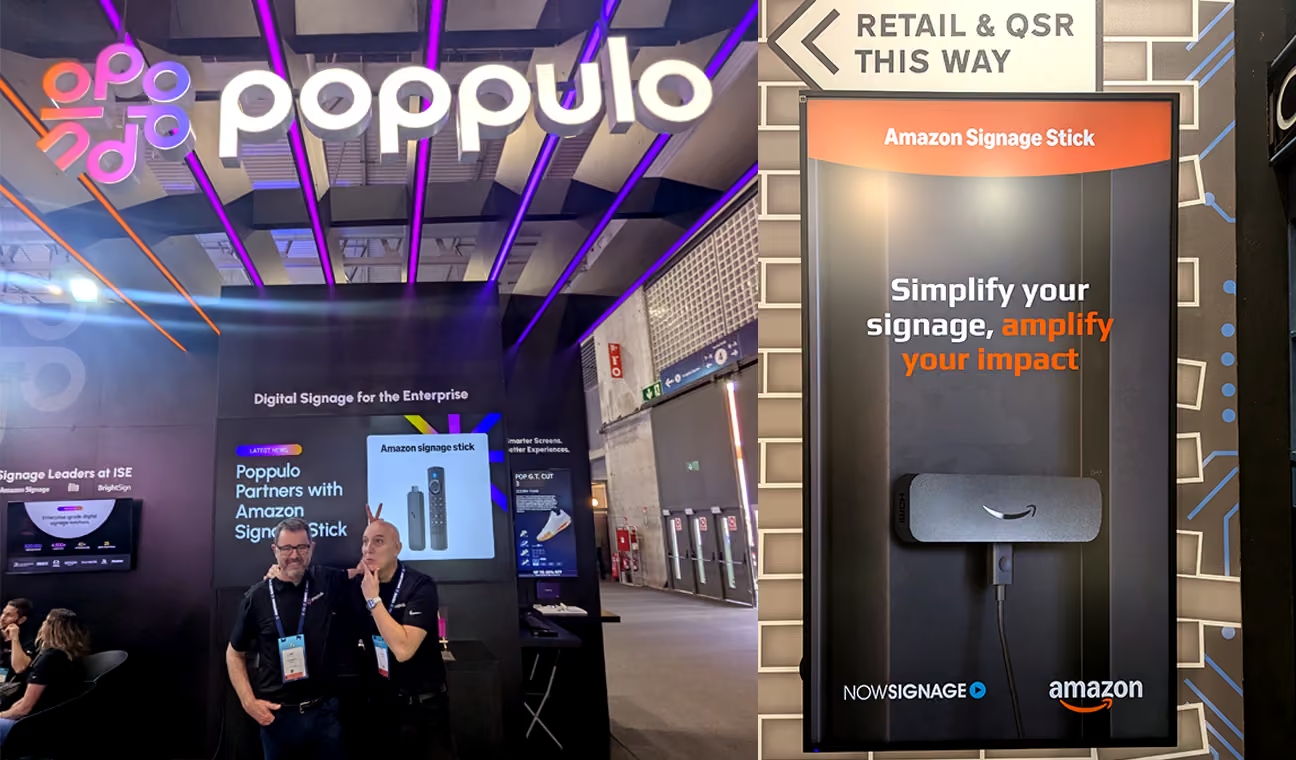
Thank you to our CMS partners
We’d like to thank the CMS partners who featured Amazon Signage in their ISE demonstrations and engaged with customers and integrators on-site. Your collaboration helps bring scalable, software-led deployments to life.
Resources
The hidden cost of "cheap" digital signage
From single-location businesses to enterprise fleets, cheap media players often cost more to operate than they save upfront. Here's what to factor in before you buy.

How smart hardware choices keep digital signage projects moving forward
Discover how IT teams are avoiding costly signage delays by pairing the right CMS with purpose-built media players—without ripping and replacing existing displays
Whether you deploy signage or buy it: simplified digital signage made reliable and scalable
Learn how Carousel, DataVisual, and Amazon Signage deliver simplified, scalable digital signage solutions that reduce complexity and operating costs for both resellers and end customers.